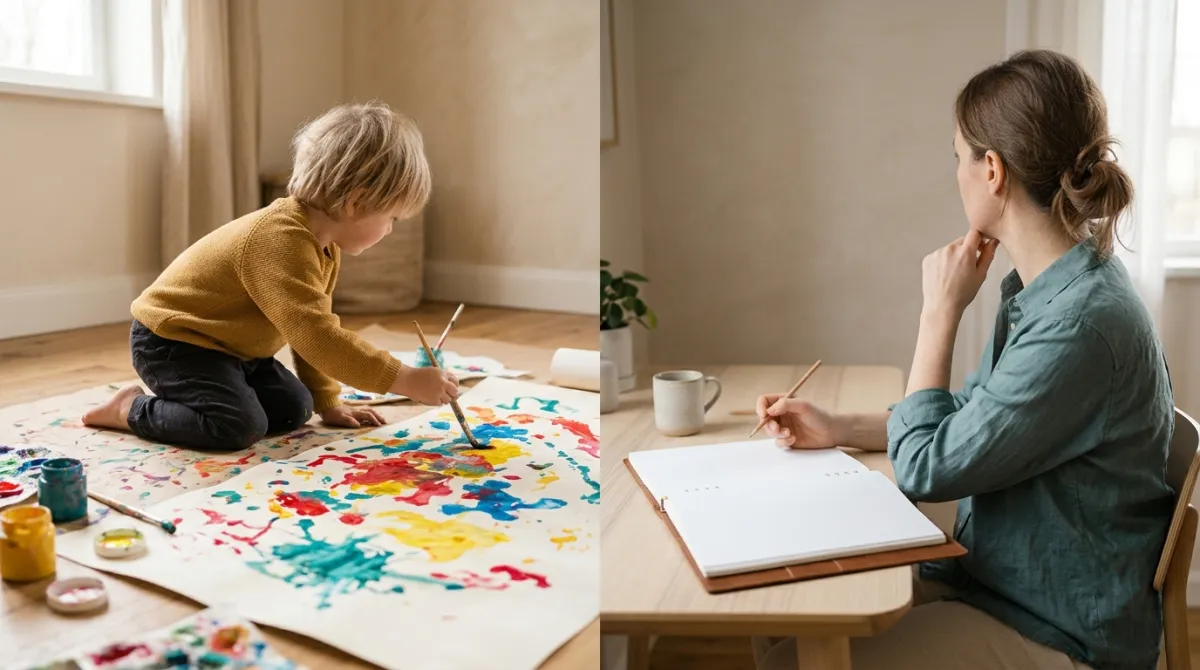
- A 2026 study in PLOS One compared 92 preschoolers with 70 adults on creative tasks. Blind judges rated the adults’ work as more creative.
- Yet over 75% of adults guessed that children would be more creative.
- The real difference was emotional: children reported more enjoyment and less fear. Children feel creative daily; adults, about weekly.
- The lesson: your skill probably grew with age. What shrank is your willingness to try without guarantees.
The myth we all believe
“Kids are naturally creative; school and adulthood kill it.” You have heard it in talks, books and reels. It feels true because we remember children drawing purple elephants without hesitation.
Researchers at the University of Graz, working with colleagues in Munich, Louvain and New Haven, decided to test it directly.
What the study did
Janika Saretzki, Mathias Benedek and colleagues gave 92 preschool children and 70 adults the same three tasks:
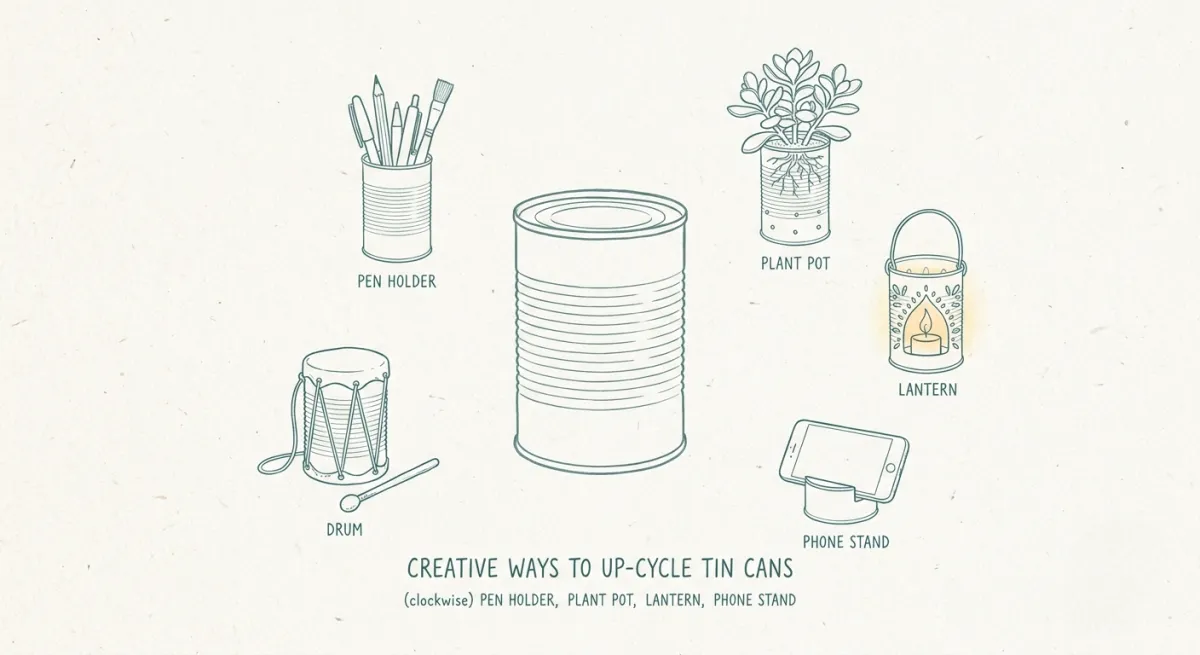
- List unusual uses for a tin can (3 minutes).
- Draw an imaginary animal (8 minutes).
- Draw anything they wanted (8 minutes).
Judges who did not know who made what rated the results. Participants also reported how they felt while working.
What it found
| Measure | Children | Adults |
|---|---|---|
| Rated creativity of output | Lower | Higher |
| Enjoyment while creating | Higher | Lower |
| Fear / worry about the result | Lower | Higher |
| How often they feel creative | Daily | About weekly |
The headline is not “adults are more creative”, though. It’s this: adults are better at creativity but feel worse doing it. And they wrongly believe they have lost the ability.
Why this matters for you
If you think you “aren’t creative anymore”, you probably avoid creative work. You don’t start the YouTube channel, the blog, the side project. The study suggests the barrier isn’t ability. It’s the fear of looking bad.
This is good news. Ability takes years to build. Fear can be reduced in weeks with the right habits.
5 ways to get the child’s courage back (and keep the adult’s skill)
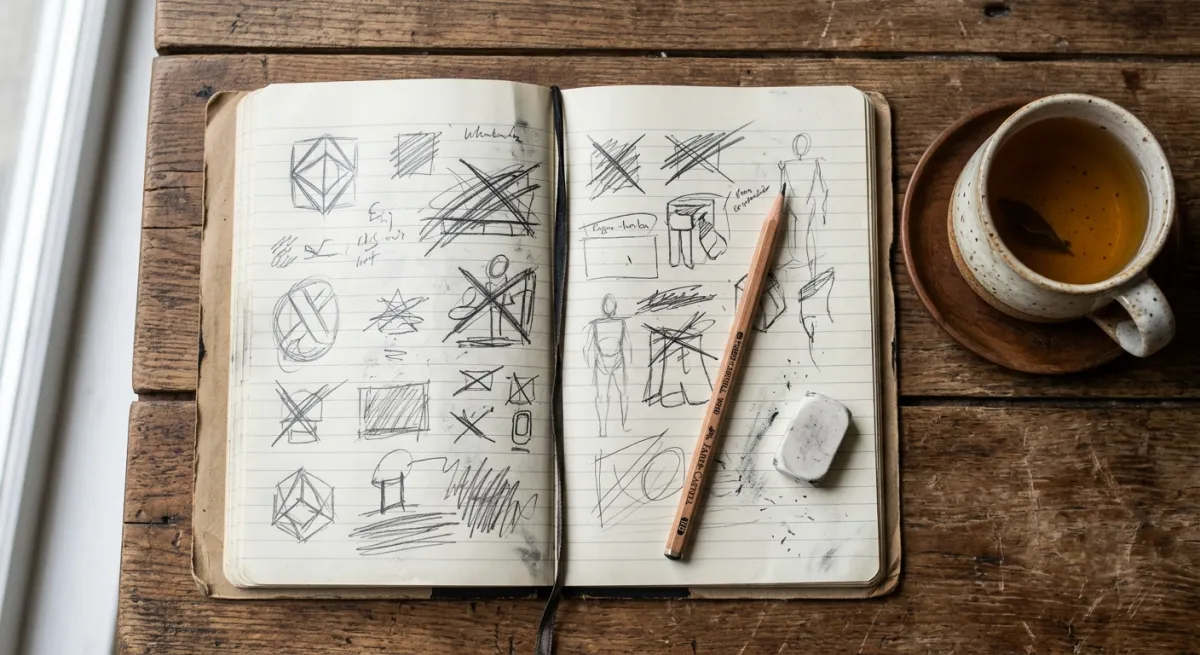
- Make “ugly drafts” on purpose. Give yourself 10 minutes to make the worst version. It removes the fear of judgment from step one. Life is too short to wait until you’re perfect.
- Separate creating from judging. Write or draw first; edit the next day. Children don’t edit while playing. Not everything you do needs to impress someone.
- Lower the stakes. Make one private piece a day that nobody will see. That awkward moment, that failed attempt, that criticism: will it really matter 50 years from now? Probably not. Smile, learn, and move on.
- Count attempts, not hits. Track how many ideas you produced this week, not how many were good. Try a hundred things. Fail at some. Succeed at others. At the end of life, you’ll remember the adventures you had, not the opinions you avoided.
- Play with constraints. The tin-can task works because it is small and silly. Pick one everyday object and list 10 uses in 3 minutes. Explore strange ideas. Let yourself be amazed by ordinary things. Growing older doesn’t mean you have to stop being a child at heart.
Your one action
Set a 3-minute timer today, pick any object on your desk, and write 10 unusual uses for it. Don’t judge a single one. Just notice how it feels to create without an audience.
Honest limits
- The study used one set of tasks in one cultural setting; creativity is broad.
- We read the study through a news report and the published reference; check the full paper for exact scores.
- “Fear” here means self-reported feelings, not a clinical measure.
FAQ
Are children more creative than adults?
In this 2026 study, no. Blind judges rated adults’ work as more creative.
Then why do adults feel less creative?
Adults reported more worry and less enjoyment, and they feel creative less often.
Can I train creativity?
Skill grows with practice, and lowering the fear of judgment makes it easier to start.
Who did the research?
Saretzki, Fratzl, Barbot and Benedek, University of Graz with partners, published in PLOS One in 2026.
Next in the series: Part 2, “Why Boredom Is Good for Your Creativity”.
Related reading
- Why Boredom Is Good for Your Creativity (Creativity Series, Part 2)
- Atomic Habits: 5 lessons that actually change behaviour
- Why multitasking makes you slower — and what to do instead
Sources
- PLOS One – Saretzki, Fratzl, Barbot & Benedek: Are children really more creative than adults? (2026)
- news.at – Kinder sind nicht kreativer als Erwachsene, aber zuversichtlicher (2026)
हर नया आर्टिकल, वीडियो और रोज़ का एक छोटा self-improvement टिप — सीधे आपके WhatsApp पर। Free, no spam.

Leave a Reply