
- In a famous 2014 Science study, 67% of men and 25% of women chose to give themselves an electric shock rather than sit alone with their thoughts for 15 minutes.
- But a 2012 study found that an easy, mind-wandering task improved creative problem solving on problems people had already seen.
- Boredom isn’t empty time. It’s when your mind quietly keeps working on unfinished problems.
- The lesson: stop filling every gap with your phone. Give your mind short, planned “empty” breaks.
We’d rather get a shock than be bored
University of Virginia psychologist Timothy Wilson and his team asked people to sit alone in a room with nothing to do. Of 409 participants across studies, nearly half said they didn’t enjoy it. When asked to try it at home for 6 to 15 minutes, a third admitted cheating.
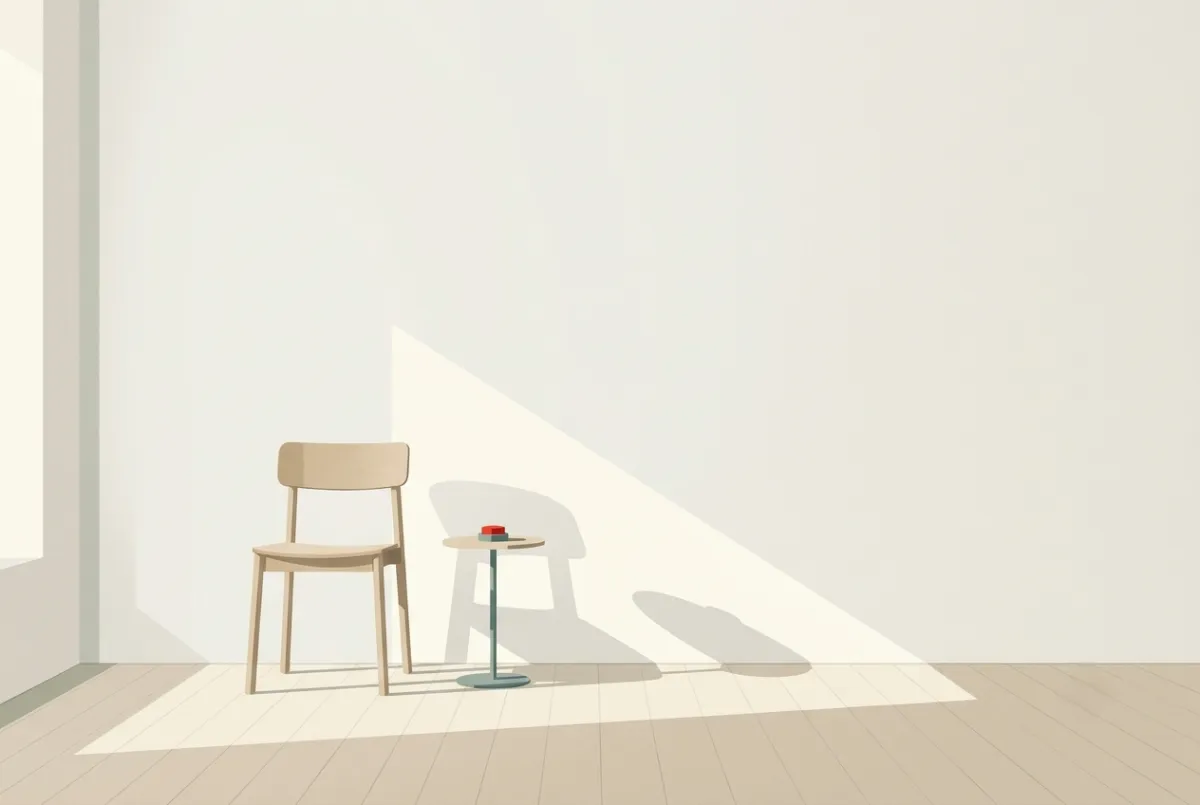
Then came the striking part. In one test, 55 people sat alone for 15 minutes with a button that gave a mild ankle shock, one they had earlier said they would pay to avoid. 67% of men and 25% of women pressed it at least once.
That was 2014. Today the phone is always within reach, so most of us never face even 15 minutes of nothing.
What happens in a “bored” mind
Benjamin Baird, Jonathan Schooler and colleagues at UC Santa Barbara gave people a creativity test: list unusual uses for everyday objects. Then they took a break doing one of the following:
- a demanding task;
- an easy task that let the mind wander;
- rest;
- no break.
After the break, people who had done the easy, mind-wandering task improved most on the problems they had already seen. The paper’s title says it well: “Inspired by Distraction”.
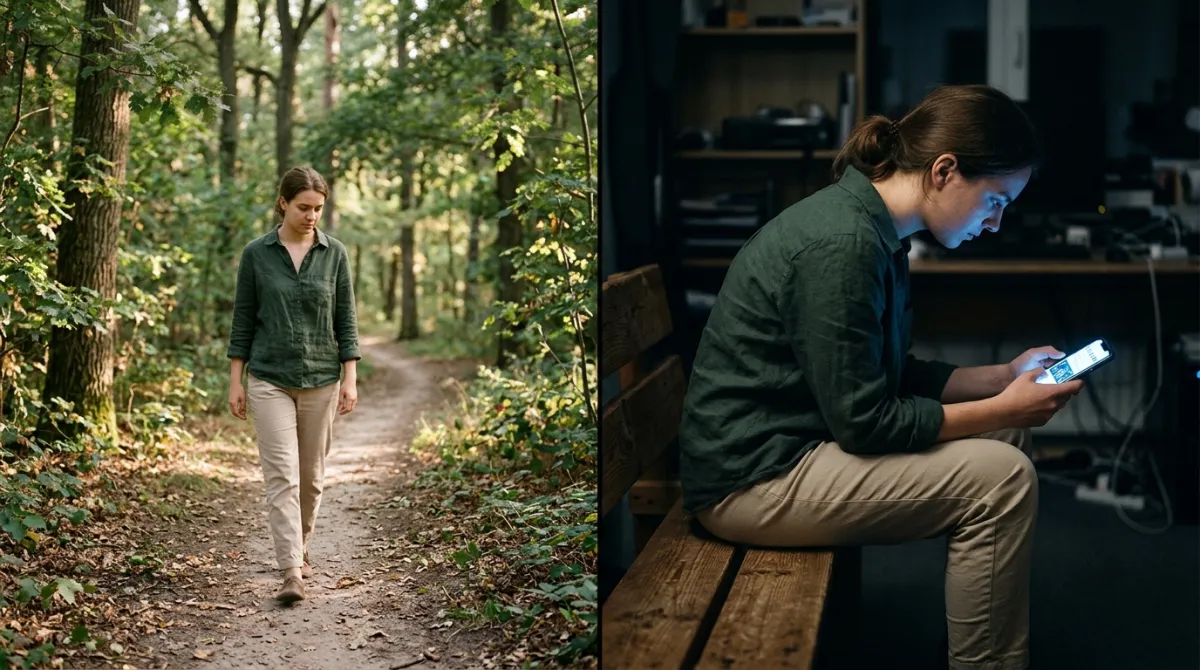
What this means: your brain keeps working on a problem in the background, but only when the foreground is light. Scrolling a feed is not light; it fills your attention with new input.
Boredom vs distraction
Here is our simple summary of the difference, based on the UC Santa Barbara findings:
| Productive boredom | Phone distraction | |
|---|---|---|
| Attention load | Low | High |
| Mind wandering | Yes | Rarely |
| Effect on unfinished ideas | They incubate | They get pushed out |
| Example | A walk, washing dishes, a bus ride | Reels, news, chats |
A 7-day boredom practice for creators
- Load the problem first. Write down the video idea or article question you are stuck on.
- Then do something easy. A 15-minute walk, chores, or tea without a phone.
- Carry a notebook. Ideas often come during or just after the easy task.
- Phone-free transitions. No phone in the first 10 minutes after waking, or while waiting in a queue.
- Start small. If 15 minutes alone feels hard (it did for half of Wilson’s participants), start with 5.
- Have a topic to think about. Wilson suggests that having pleasant topics to think about makes time alone easier.
- Review on day 7. Count the ideas in your notebook. That number is your proof.
Your one action
Write down one problem you’re stuck on, put your phone in another room, and take a 10-minute walk or do the dishes. Jot down whatever comes to mind right after.
Honest limits
- Baird’s effect appeared for problems people had already seen, not brand-new ones. You need to load the problem first.
- These are lab studies with small groups; real life is messier.
- Chronic boredom (feeling empty for weeks) is different from short breaks and can be linked to low mood. If that’s you, talk to someone you trust or a professional.
FAQ
Is boredom good for creativity?
Short, low-effort breaks that let the mind wander improved creative problem solving in a 2012 study.
Did people really shock themselves instead of being bored?
Yes: 67% of men and 25% of women in Wilson’s 2014 study.
Does scrolling count as a break?
Not for this purpose. It occupies attention instead of freeing it.
How long should a boredom break be?
Start with 5 to 15 minutes of an easy task, with your phone away.
Related reading
- You Didn’t Lose Your Creativity. You Learned to Fear Judgment. (Creativity Series, Part 1)
- Why multitasking makes you slower — and what to do instead
- Time blocking: a simple guide to planning days that actually work
Sources
- Scientific American – People Prefer Electric Shocks to Tedium (Wilson et al., Science, 2014)
- UC Santa Barbara – Baird et al.: Inspired by Distraction, Psychological Science (2012)
हर नया आर्टिकल, वीडियो और रोज़ का एक छोटा self-improvement टिप — सीधे आपके WhatsApp पर। Free, no spam.


Leave a Reply